EU Has Been Quietly Monitoring UFOs as Pilots Raise Airspace Safety Concerns

I’ve been following the growing discussion around UFOs and UAPs for a few years now, but much of the attention has tended to come from the United States. So I’m quite interested to see that Europe may have been paying closer attention to the phenomenon than most of us realised.
Newly revealed documents suggest that officials in Brussels have also been quietly paying attention to unexplained objects in the skies.
According to documents seen by Euronews, the European Commission has been monitoring unidentified anomalous phenomena behind the scenes since at least 2023, while officials have also discussed the need for Europe to improve its ability to detect and identify unusual objects entering its airspace.
European Commission Has Been Monitoring UAPs
The documents reportedly originate from the European Commission’s defence department and include references to observations of unidentified phenomena in the sky and space.
In correspondence seen by Euronews, Commission officials acknowledged the issue and indicated that improving Europe’s ability to detect and identify UAPs could become increasingly important.
However, this does not mean that the European Union has created its own equivalent of the Pentagon’s dedicated UAP investigation programmes.
At present, there is no centralised EU-wide organisation responsible specifically for investigating UFO or UAP reports.
Instead, individual European countries deal with reports in different ways, while many sightings may simply be handled through existing aviation, defence or meteorological systems.
That fragmented approach is something some campaigners now want to change.
Pilots Want a Better Way to Report Unexplained Objects
One of the more serious aspects of the debate concerns aviation safety.
Pilots speaking to Euronews have argued that there is still a stigma attached to reporting unusual sightings and that could potentially discourage aviation professionals from reporting something they cannot identify.
The issue becomes particularly important when an unidentified object appears close to an aircraft or within controlled airspace. Whatever its origin, an unknown object could represent a potential safety or security concern.
The European Union Aviation Safety Agency (EASA), however, has reportedly said that it has not identified evidence suggesting UAP reports currently represent a systemic aviation safety problem.
That leaves an interesting question, should Europe nevertheless establish a standardised system for pilots to report unusual encounters?
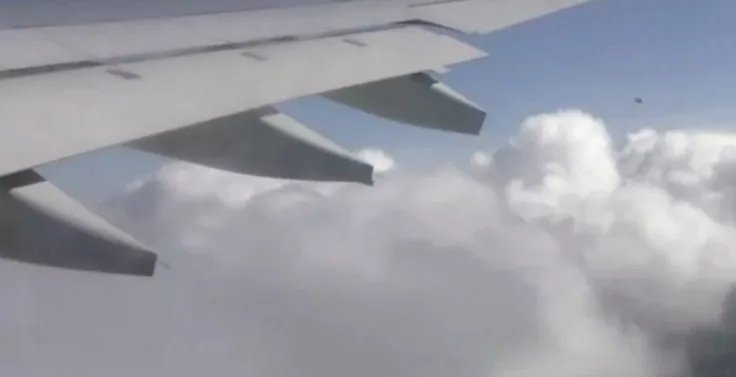
Image from a YouTube video showing a UFO near a plane over Heathrow in 2014
France Has Investigated UFO Reports for Decades
Europe isn’t entirely new to official UFO investigations.
France has one of the world’s longest running government backed programmes dedicated to investigating unexplained aerial phenomena.
GEIPAN, the Group for Studies and Information on Unidentified Aerospace Phenomenan, operates as part of France’s national space agency, CNES.
The organisation collects reports, investigates sightings and publishes its conclusions. Most cases ultimately receive conventional explanations.
According to GEIPAN’s statistics dated in 11th August 2026, 28.1% of its published cases were completely identified and 38.7% were considered probably identified.
Another 30% remained unidentified because there was insufficient information available.
Most interestingly, 3.1%, currently 106 cases, remained unidentified even after investigation.
An unexplained classification does not mean that GEIPAN considers these cases as extraterrestrial. It simply means investigators have not been able to establish a satisfactory explanation from the available evidence.
GEIPAN itself stresses that no proof of aircraft of unknown origin has been found during its decades of investigations.
Could Europe Create Its Own UAP Reporting System?
The renewed discussion comes at an interesting time.
Across the Atlantic, the United States has dramatically increased official scrutiny of UAPs in recent years, with military footage, government reports, congressional hearings and newly declassified records bringing what was once considered a fringe subject into mainstream political debate.
Europe has taken a much quieter approach, but the newly revealed documents suggest that the subject hasn’t been completely ignored behind closed doors.
A coordinated European reporting system could potentially allow sightings from pilots, military personnel, radar operators and members of the public to be compared across national borders
It could also help investigators distinguish genuinely unusual incidents from increasingly common objects such as drones, satellites and other aircraft.
With European airspace becoming increasingly crowded, and unidentified drones already creating security concerns in several countries, knowing exactly what is flying overhead is becoming increasingly important regardless of whether a sighting has an extraordinary explanation.
UFOs or an Airspace Security Issue?
Perhaps the most interesting aspect of the European discussion is how much the language surrounding UFOs has changed.
The question is increasingly not simply, “Are UFOs extraterrestrial spacecraft?”
Instead, governments are asking, “What is entering our airspace, and can we identify it?”
In many cases, the answer will undoubtedly be something conventional.
But as France’s decades of investigations demonstrate, there are still occasional cases where investigators cannot confidently determine what witnesses observed.
Whether the European Union will eventually create a more formal system for collecting and investigating those reports remains to be seen.
But for now, however, the newly revealed documents suggest that Brussels has been paying closer attention to the UAP issue than many people may have realised.
Sources:
- Euronews: Exclusive: Brussels keen to monitor UFOs ‘under the radar’
- GEIPAN / CNES: Official UAP case statistics
Enjoy Paranormal Globe?
Add us as a Preferred Source on Google to see more latest stories in Google Search.
About the Author: Paul Nichol