Pentagon Removes NDA Barrier for UAP Disclosures

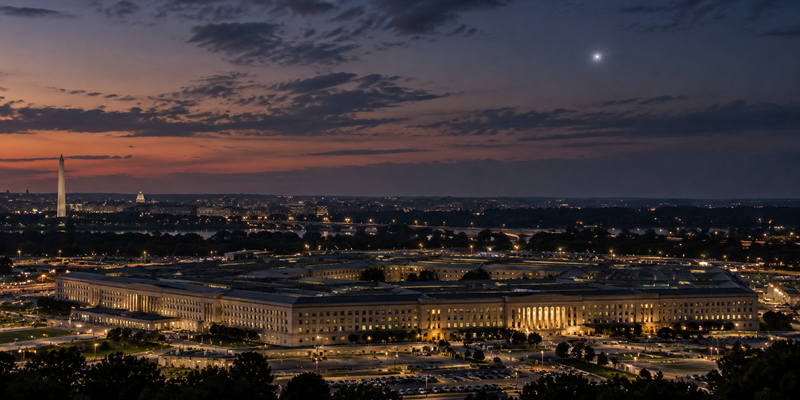
The US government has taken another significant step towards greater transparency over unidentified anomalous phenomena, issuing a new legal waiver designed to allow military personnel and contractors to share protected UAP information without breaching certain secrecy agreements.
Announced on September 14th, the waiver establishes a legally protected channel for current and former military personnel, civilian employees and contractors to provide UAP related National Defense Information directly to designated representatives of the Presidential Unsealing and Reporting System for UAP Encounters, better known as PURSUE.
The move could potentially allow people with first-hand knowledge of sensitive UAP incidents or programmes to provide information that they may previously have believed they were legally prevented from discussing.
However, there is an important distinction. The waiver does not give anyone permission to publicly reveal classified UAP information.
Instead, it allows protected information to be disclosed through an authorised government channel, where it can then undergo security review and potentially be declassified.
What Has Actually Changed?
According to the US Department of War, the new waiver applies to current and former service members, civilian personnel and contractors who hold, or previously held, access to UAP related National Defense Information.
Most significantly, it overrides certain civil and administrative enforcement provisions contained within Non-Disclosure Agreements (NDAs) and Special Access Program Indoctrination Agreements (SAPIAs).
Special Access Programs can impose security restrictions beyond those surrounding ordinary classified information.
Under the new waiver, those restrictions cannot be used to penalise an eligible person simply for providing relevant UAP information directly to authorised PURSUE representatives.
The protection, however, applies specifically to communications with the PURSUE team.
It is not a blanket cancellation of secrecy agreements and does not authorise personnel to disclose protected information to journalists, podcasts, social media or the general public.
What Is PURSUE?
PURSUE stands for the Presidential Unsealing and Reporting System for UAP Encounters.
The initiative was established as part of the US government’s continuing effort to gather, review and potentially release historical information relating to UFOs, now officially referred to as Unidentified Anomalous Phenomena or UAP.
PURSUE has already released several batches of government material, including documents, imagery and videos relating to historical and more recent UAP reports.
The latest waiver adds another important element to that process. Information from people who may have direct knowledge of sensitive incidents or programmes.
Rather than releasing that information themselves, individuals can provide it to PURSUE for systematic review, security assessment and possible future declassification.
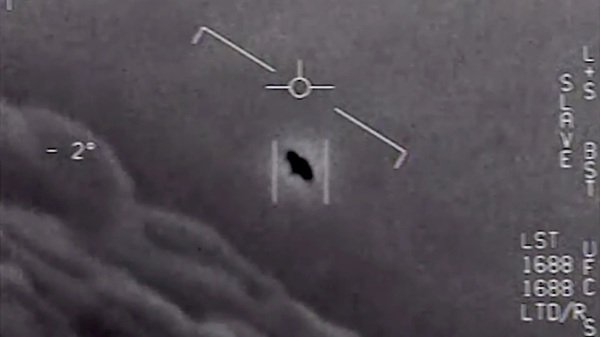
The famous US Navy Gimbal UAP video was officially released in 2020.
Why Were NDAs Considered a Problem?
For years, one of the recurring claims within the UAP disclosure debate has been that current and former government personnel may possess information they cannot discuss because of security agreements.
Some alleged whistleblowers have said that secrecy restrictions, security clearances and the possibility of legal or administrative consequences have discouraged people from coming forward.
The new waiver is intended to remove at least part of that concern.
The Department of War says individuals with direct knowledge of UAP related programmes have previously raised fears about legal liability, losing security clearances or facing administrative action if they disclosed protected information.
By explicitly authorising disclosures to PURSUE, the government is now providing a formal route through which that information can be reported.
Does This Mean UAP Secrets Will Now Be Made Public?
Not necessarily.
This is perhaps the most important part of the announcement.
Information provided through PURSUE does not automatically become public information.
Any protected or classified material entering the system will still undergo security evaluation and review before a decision can be made about possible declassification.
That means the waiver shouldn’t be interpreted as an instruction for military personnel to reveal classified UFO secrets publicly. Instead, it removes specific contractual barriers preventing eligible individuals from providing information to the government’s own UAP disclosure process.
Whether that ultimately results in major new information becoming publicly available remains to be seen.
Another Step in the UAP Disclosure Debate
The announcement comes amid continuing political pressure in Washington for greater transparency surrounding UAP.
Congressional hearings, whistleblower testimony and government investigations have transformed the UFO subject in recent years from something largely associated with fringe culture into an issue openly discussed by lawmakers, military officials and intelligence agencies.
At the same time, extraordinary claims surrounding alleged secret programmes, recovered craft and non-human technology remain disputed and have not been publicly substantiated by conclusive evidence.
The Pentagon’s All-domain Anomaly Resolution Office (AARO) has previously said its historical investigations found no verifiable evidence that the US government or private industry possessed extraterrestrial technology.
The new waiver does not change that conclusion. What it potentially changes is the ability of people who believe they possess relevant protected information to provide it through an officially authorised channel without certain NDA or Special Access Program restrictions standing in their way.
What Happens Next?
The biggest question is now whether anyone comes forward with information significant enough to change what is publicly known about UAP.
The waiver creates the pathway.
What travels down that pathway, and how much of it can eventually be declassified and released to the public, could prove far more important.
For those following the long running UFO disclosure debate, the next PURSUE releases may therefore be quite interesting.
Whatever emerges, the US government has now formally acknowledged that secrecy agreements should not prevent authorised UAP information from reaching the officials tasked with reviewing it.
Enjoy Paranormal Globe?
Add us as a Preferred Source on Google to see more latest stories in Google Search.
About the Author: Paul Nichol