They Stand on the Mountains and Watch. The Dark Watchers of California

The Dark Watchers of Santa Lucia Mountains in California is an eerie folklore that I have recently just discovered. I had never of them before. Tall dark shadow people, that have been quietly watching over the mountains for centuries and possibly longer.
California’s wild central coastline has a jagged and unforgiving mountain range known as the Santa Lucia Mountains. With its steep ridges plunging towards the Pacific Ocean and dense fog that rolls in without warning, swallowing its trails and distorting distance. It is here that among these isolated peaks and knife edge paths that one of California’s most strange and unsettling legends was born, the Dark Watchers!
For centuries now, hikers, ranchers, writers, and locals have reported seeing tall, shadow-like figures standing motionless on distant ridgelines. They do not wave. They do not speak. They just simply watch. And when they are noticed… they vanish!
Shadowed Sentinels of the High Peaks
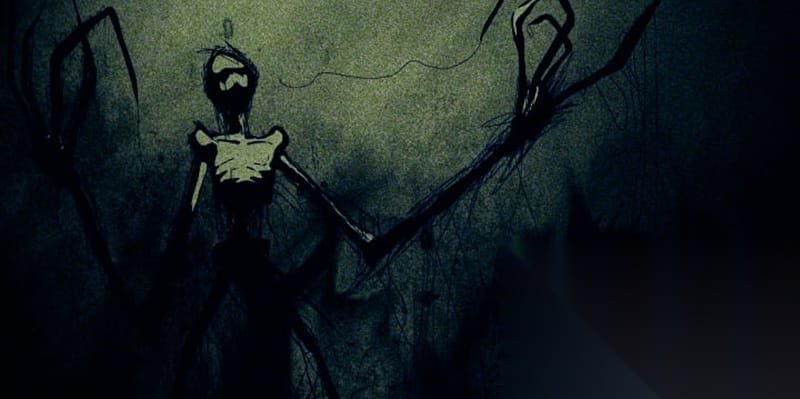
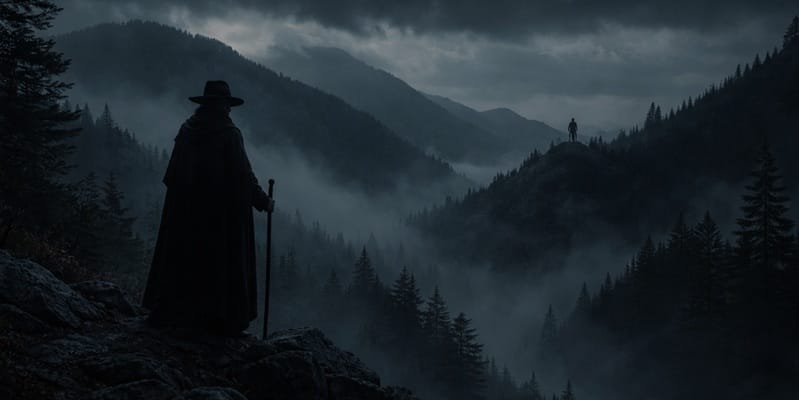
The Dark Watchers are most commonly described as humanoid silhouettes, unnaturally tall, estimated to be between 7 and 10 feet in height. Witnesses frequently report that the figures appear cloaked or robed, sometimes wearing what looks like a wide-brimmed hat, and occasionally holding a staff or walking stick, but their behaviour is perhaps the most chilling aspect.
They stand perfectly still while gazing out over the mountains or down towards those below, as if they are standing guard. No footprints are ever found. No sounds accompany their presence. And any attempts to approach them are always unsuccessful, the figures either dissolve into a mist, step behind a ridge and disappear, or simply just fade from sight.
Sightings almost always occur during dawn or dusk, when light bends strangely across the peaks and shadows stretch unnaturally long.
Ancient Roots and Indigenous Echoes
While many associate the Dark Watchers with Spanish folklore, some researchers believe the legend may stretch back much even further.
The Chumash people, who lived in and around the Santa Lucia region long before European contact, spoke of spiritual guardians and mountain beings tied to the land. Although no surviving Chumash stories directly name them as Dark Watchers, the concept of watchful entities inhabiting high places aligns closely with their world spiritual view, the believed spirits are bound to nature rather than separate from it.
When Spanish settlers arrived in the 18th century, stories of strange figures watching from the hills began appearing in journals and oral accounts. They reportedly referred to them as “Los Vigilantes Oscuros”, The Dark Watchers, suggesting that the phenomenon was already well known and feared.
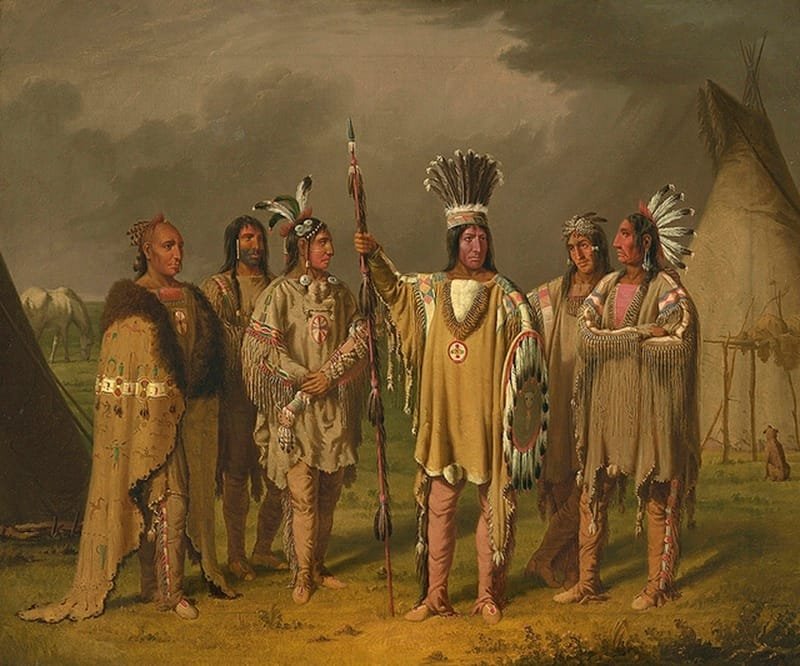
The Chumash People of California.
From Folklore to Literature
The legend gained wider attention through American literature, most notably the work of John Steinbeck. In his short story Flight, Steinbeck describes shadowy watchers on the ridges above his characters, observing silently as fate unfolds below. Steinbeck later admitted the Dark Watchers were a familiar presence in local storytelling during his youth.
Poet Robinson Jeffers, whose stone home still overlooks the Big Sur coastline, also referenced strange, watchful forms in his writings, figures that embodied the raw, indifferent power of nature.
These literary references helped cement the Dark Watchers as more than just campfire tales.
Scientific Explanations, or Convenient Dismissals?
Sceptics often point to a natural explanation known as the Brocken spectre, an optical phenomenon where a person’s shadow is projected onto fog or cloud, appearing enormous and distorted. In the Santa Lucias, where fog is frequent and light conditions are extreme, such illusions are entirely possible.
Others suggest pareidolia, the brain’s tendency to find familiar shapes, such as faces and human forms in random patterns.
However, critics of these explanations note several unsettling inconsistencies.
Many witnesses report seeing the figures from miles away, where no human shadow could realistically be cast. Some sightings involve multiple watchers, spaced evenly across ridgelines. The figures often appear independent of the observer’s position, remaining fixed even as the witness moves. So not all sightings neatly fit the science.
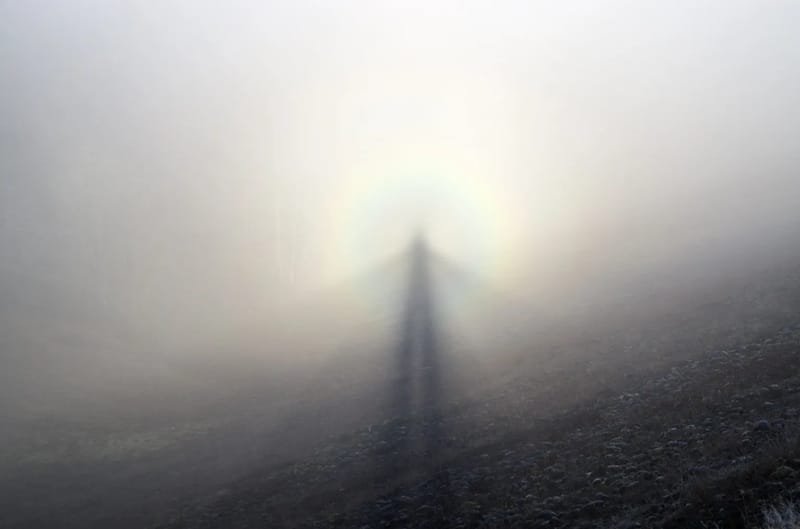
A silhouette through the mist.
Paranormal Theories. Guardians, Entities, or Something Else?
Within paranormal circles, the Dark Watchers are often theorised to be, Interdimensional beings, visible only under certain atmospheric or electromagnetic conditions.
Nature spirits or ancient guardians tied to the land. Residual apparitions, imprinted on the environment over hundreds of years. Or even non-human intelligences such as aliens or interdimensional beings, observing but deliberately avoiding interaction.
With their behaviour being silent, distant and non-aggressive, suggests they are not hunting or haunting, but just watching, but why they are watching remains the greatest mystery.
Some believe the Watchers appear more frequently to those who are alone, exhausted, or emotionally vulnerable, mental states that are known to heighten perception and, possibly, heighten sensitivity to phenomena beyond normal awareness.
Why the Dark Watchers Still Matter
Unlike many paranormal legends that fade with time, the Dark Watchers continue to be reported today. Even today experienced hikers and park rangers quietly admit to seeing tall human shapes they cannot explain.
Whether they are just illusions or indeed some kind of entity, the Dark Watchers embody a powerful truth that there are places in our world where the you can feel that the world is older than humanity, where the land does not belong to us and never did.
As the fog creeps along the ridges of Santa Lucia Mountains, and daylight starts to slip away, it’s easy to feel that something or someone is up there …standing still …watching! And who knows, perhaps they have always been watching, since the dawn of time.
Has this article inspired you to visit a paranormal location? Plan and book your visit here.
About the Author: Paul Nichol