The Cryptid You Never Knew

While this may be classified by some as a mythical creature, what little information I have come across regarding the Krepid has been on obscure sites dealing with cryptids. So going with what I could find on this obscure creature it seemed by many people in the modern era to be classed as a cryptid.
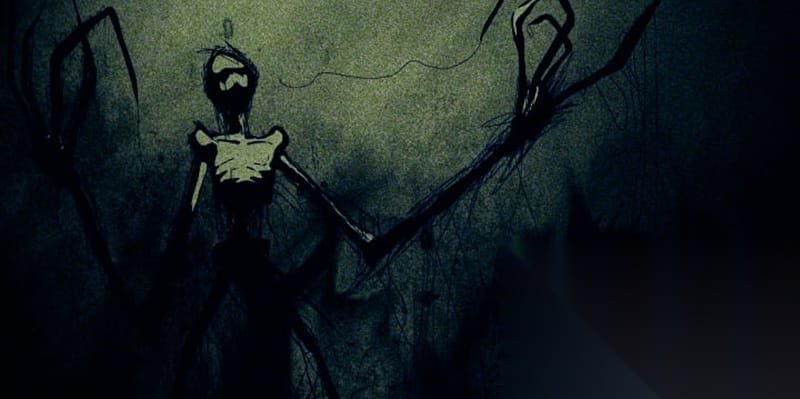
The Krepid is an ancient race of shape shifters that supposedly pre-date mankind. They were described as very tall thin creatures with long skinny limbs, no facial features and fed off of the energy of other creatures. It was said that when they were created that they were made not from flesh and bone but from the deepest shades of dread and despair. They are believed to be able to exist just beyond the human’s perception of reality and that they are reason why we fear the dark and the unknown.
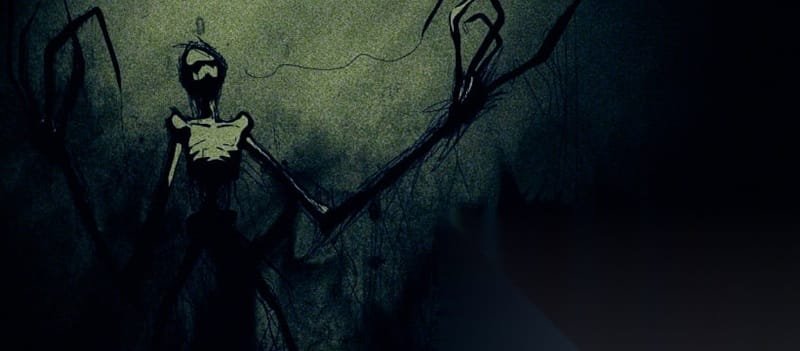
The Krepid. Image from Dark Passages TV series
They loved to feed on human energy, the myths say they have the ability to know the deepest fears of man and were so vicious and warlike that they tried to destroy mankind. The god Baktiotha who created them was forced to annihilate nearly all of the Krepid after they hunted and attacked humanity to near extinction. Baktiotha however took pity on those creatures that were left and allowed them to exist but as with all good myths there was a twist. The Krepid could only feed on humans who knew of their existence, these unfortunate humans would not just need general knowledge of them but would need to know their specific names.
While this may seem like a modern myth crafted by some Cyber-Skald at his keyboard, the myth of these creatures was originally discovered written on tablets that were found at an archaeological dig site in Syria. The site was Ain Dara, an Iron-Age temple that was in use from 1300 BCE to 740 BCE. The temple was a Syro-Hittite or Neo-Hittite/Aramaean sanctuary. It has been noted that there is a marked resemblance between the temple at Ain Dara and that of descriptions of the great temple of Solomon as given in the Bible. When it was discovered in 1955 it had an unusual feature, that of a set of one metre foot prints carved at its entrance. The temple site was nearly destroyed in 2018 by an air strike.
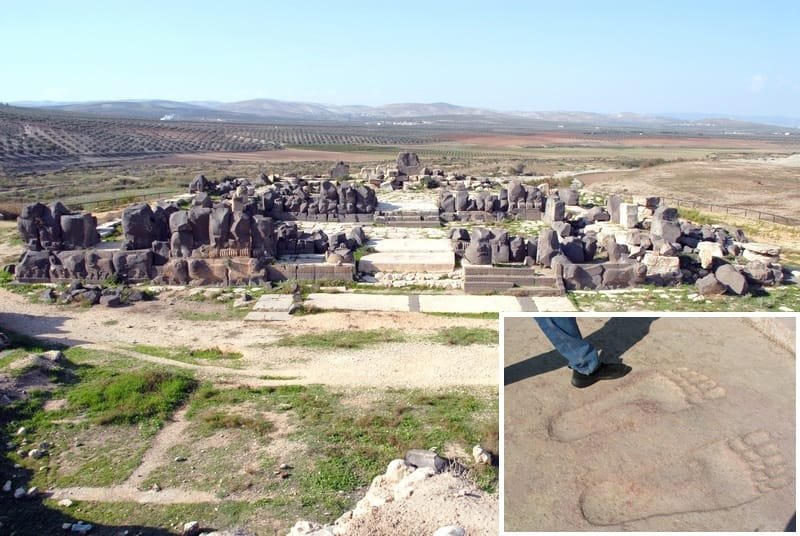
The Ain Dara temple with the giant footsteps at the entrance.
Evidence of this story, as with all good stories, was discovered by accident. The tablets were located in an obscure part of the temple and were only seen because they were made of gold. While this may seem a little like an embellishment, there have been other examples of golden tablets inscribed with cuneiform found in the same geographical area.
The obscurity of this myth seems rather strange in the modern age where we tend to have a view that there is nothing new to discover. What adds to the strangeness of the obscurity is that Baktiotha, sometimes referred to as the “Lord over the forty and nine kinds of serpents”, seems to be quite well known and references of him certainly date back to the same time period as the earliest use of the temple. His influence and existence would appear quite wide spread. Baktiotha is featured in the Handbook of Ritual Power, also Known as The Coptic Spellbook. This deity has also been associated with Gnosticism and the Sethians and is quite often associated with later magical practices which often call on him in protection spells.
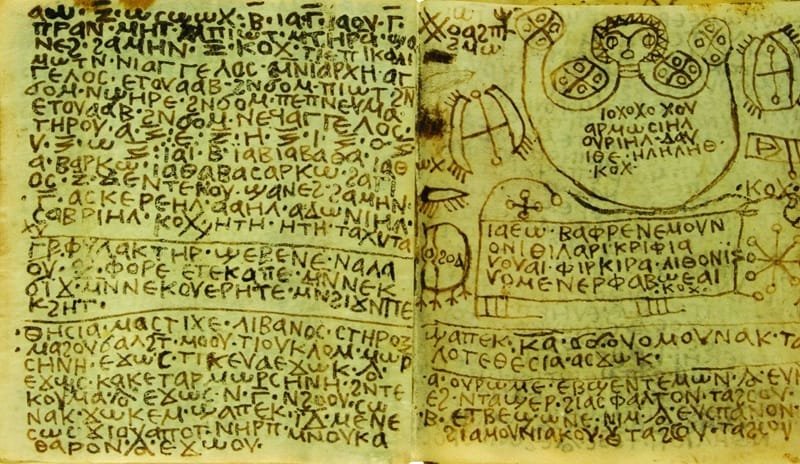
The Coptic Spellbook.
Given the time frame of references to the Krepid this would make it one of the earliest records of a cryptid, if we to assume that these were real creatures. However here is where the issue with this creature comes in, so much of the information on the Krepid seems to have become ingrained with modern folklore and conspiracy theories. Leaving a confusing mix of the new and of the original myth about them making it tricky to decipher their true place in folklore.
While myths of creatures that can change form are known to go back as long as human myths have been recorded. The lessons normally taught in the traditional myths of shape-shifters, is most often based around the fear of us not knowing who is among us, in other words beware of strangers in the tribe. Alternatively they can be seen as an allegory for the darkness and beastliness that is within us all. Even Gilgamesh encountered shape-shifters in his journeys, he encountered the Humbaba that haunted the cedar forests, a creature that does bear a striking resemblance to the Krepid.
Is this because they were a real creature? Or the author of the epic of Gilgamesh had heard the tale of Baktiotha and his Krepids? Well it would seem more likely the author had resurrected an old myth, as opposed to having encountered a Krepid. With these creatures however there seems to have been a sense of deeper horror and even one of paranoia attributed to them. Is this because they seem to have been designed to drag out the fears we had as early man about predators that stalked the night or is it that they became the template for all our latter dark and dire mythical creatures and cryptids. It could be that we still have need of a bogeyman today, to explain away the fear and terror of our modern world.
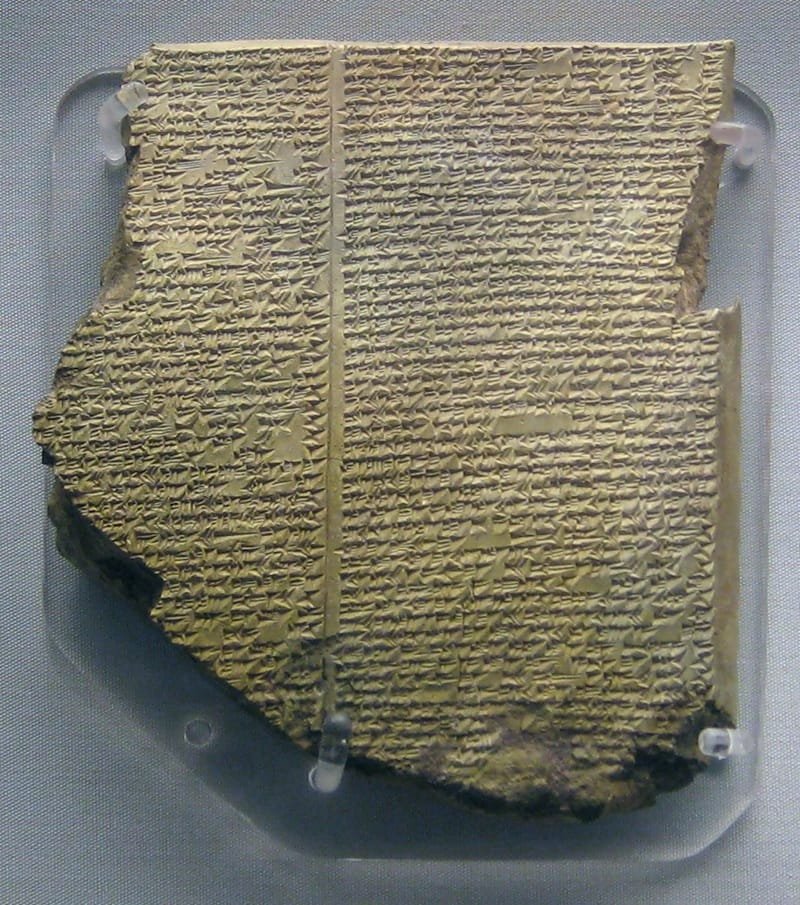
The epic of Gilgamesh tablet, dated around 1300 to 1000 BCE
The modern interpretation of this myth would suggest that these creatures are keeping themselves in the very makeup of human DNA, allowing them to feed off of our life-force. They are also attributed closely to the original ideas of Vampires and Were-Creatures, even some elements of the Skin-Walker myths would appear to match the Krepid, which given the description of their abilities and behaviours is very understandable. The really fascinating aspect to this myth and how people have reinterpreted it for the modern world is that it still seems to ring true.
When you look at the description of a modern mythical creature, that of the Slender Man, the physical resemblance is quite striking with its long thin limbs and body, featureless face. There is even a similarity in behaviour between the two creatures it appears to be around people but not be noticed. It seems to lurk in the shadows, stalk its victims, attacks people to drain their life. In almost every aspect you could be describing the Krepid.
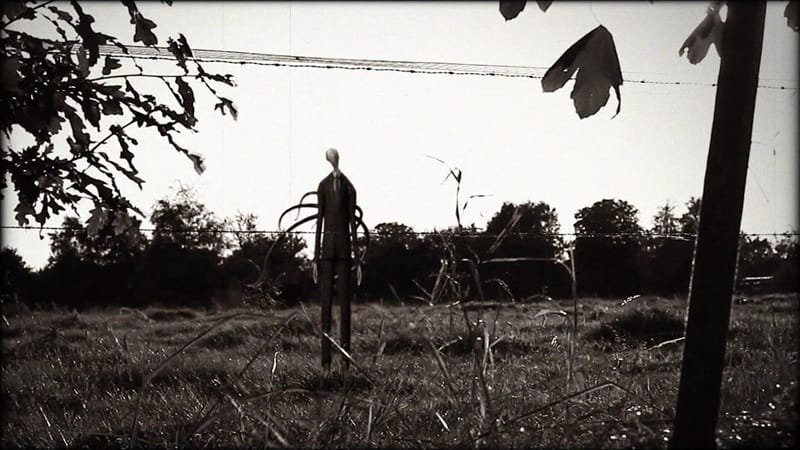
The Slender Man
Is this just a coincidence or the Krepid weaving itself into our consciousness, sowing fear and despair among us once more? Well it is more likely that the Krepid was created to represent our primal fears, much as the Slender man or any other number of creatures from myths and folklore have been designed to do for centuries. Perhaps the Krepid should be considered the archetype of the creatures of darkness, the antithesis if you will of Joseph Campbell’s Hero archetype.
Whether the Krepid was ever a real creature or not we will probably never know for certain. Personally I am hoping for not real. The Krepid however from a cultural stand point is really interesting in that a three and a half thousand-year-old myth can still resonate with us in a basic primal manner, even in our modern Hi-Tech world of mobile phones and space exploration. Perhaps the internet with its Cyber-Skalds churning out our modern myths, legends and folklore are replacing the traditional campfire tales and epic stories of heroes that we once told to keep our culture and history alive.
Who Knows we may be reading tales of the Krepid again stalking people in lonely cabins in the woods. The Krepid becoming once again the ultimate boogeyman.
*This article was written by Doctor Spook
Has this article inspired you to visit a paranormal location? Plan and book your visit here.
About the Author: Guest Post