The Paranormal Verdict: 30 Years of Unexplained Encounters

What happens when someone who has spent more than 30 years investigating the paranormal decides to put ghostly evidence on trial?
For Brian Cuthbert, creator and host of The Paranormal Verdict, the answer involves a mixture of investigation, scepticism, humour and a willingness to question even the most convincing-looking paranormal footage.
Unlike some paranormal content creators, Brian isn’t interested in declaring every unexplained noise, shadow or mysterious figure proof of the supernatural. Instead, he wants to examine the evidence, explore possible explanations and encourage viewers to reach their own conclusions.
But despite his sceptical approach, Brian has experienced plenty of strange phenomena himself, including full-body apparitions, unexplained footsteps and an unsettling investigation inside a former New York jail.
He has also created an unusual new paranormal persona called The Undead Investigator, inspired by his own experience of surviving a cardiac arrest.
I caught up with Brian to discuss his experiences, the problems with modern paranormal investigations, the evidence that continues to puzzle him and his plans for The Paranormal Verdict.
You’ve spent more than 30 years investigating the paranormal. What first got you interested in it, and what made you want to start investigating seriously?
Brian: It started when I was about five years old. I saw an old woman sitting in a rocking chair, and that was just the first of quite a few strange experiences growing up.
We had things happening in our house, something mimicking voices, an experience my sister had, what appeared to be Native American ghosts, and even some bizarre creature. So I didn’t exactly have to go looking for the paranormal. It was already finding me.
But what really got me into investigating was that I’ve always been the kind of person who needs to know how and why things work. If something strange happens, I want to know what caused it. I’m not going to automatically call it a ghost just because I can’t explain it.
And I wanted to help people. I’ve experienced enough strange things myself to understand what it’s like when something happens that you can’t make sense of. If I could help someone figure out what’s going on, or even just help them feel a little less afraid of it, that was worth doing.
So, curiosity and wanting to help people. Those are really the two things that turned my experiences into a lifelong pursuit of answers.
After three decades in the field, do you think you’ve become more sceptical, more open-minded, or a bit of both?
Brian: I’m definitely more sceptical, especially when it comes to the evidence and equipment we’re seeing in the field today.
I’ve seen what I would absolutely consider full-body apparitions, and I’ve experienced plenty of things over the years that I still can’t explain. Hell, I’m still experiencing things I can’t explain. So my fascination with the paranormal hasn’t gone anywhere.
What concerns me is the direction the field has taken. It seems like just about everything is being labelled paranormal these days, and a lot of the equipment people are relying on doesn’t actually prove what they think it proves.
I’m far more sceptical of what people report as paranormal activity now than I was years ago. But that doesn’t mean I’ve closed my mind to what’s possible.
I’m just a lot harder to convince. And after more than 30 years of doing this, I think that’s exactly how it should be.
What do you think is the biggest mistake people make when looking at paranormal evidence, particularly videos or photographs?
Brian: There are actually three big mistakes I see people making.
First, not understanding how photography and video actually work. Lighting, reflections, surfaces, temperature, camera behaviour, and about a hundred other things can create something that looks unusual when there’s really a perfectly reasonable explanation. That’s why I think proper training in evidence analysis is so important.
Second, and this is a big one, people go investigating specifically to find the paranormal instead of trying to find out what’s actually happening. They’re so eager to capture that one incredible piece of evidence that they start seeing something supernatural in everything they record.
I’ve always said, if you go looking for the paranormal, you’re going to find the paranormal. That doesn’t mean what you found is actually paranormal.
And third, I don’t think nearly enough people try to debunk their own evidence. How often do you see investigators return to a location and actually try to recreate what they captured?
Whether it’s something in a photograph, a video, or even an EVP, you should be trying to reproduce it and figure out what caused it.
Instead, too many people take what they’ve captured at face value and immediately present it as paranormal evidence.
To me, that’s a huge mistake. If you’re not willing to challenge your own evidence, how can you expect anyone else to take it seriously?
Is there one investigation, experience or piece of evidence from your 30 years of investigating that you still genuinely cannot explain?
Brian: One investigation that really stands out to me was the Old Herkimer County Jail in New York.
We were investigating there on Valentine’s Day, and it was absolutely freezing. It was probably around 20 degrees (Fahrenheit) inside the jail, and outside it was well below freezing.
At one point during the investigation, I heard footsteps approaching me. They came right up to my feet, but there was nobody there. And here’s the interesting part: two other investigators heard them too.
I’ve been investigating for a long time, and I’ve experienced some pretty strange things, but that jail gave me a feeling I don’t often get. I genuinely felt like I might be in danger. I can’t explain exactly what caused that feeling, but I remember it very clearly.
Then things got even more interesting when we reviewed our footage.
One of the cameras, operated by a high school student I was supervising, had captured what appeared to be a full-bodied apparition of a woman walking down the women’s cell-block hallway. She appeared to raise her bound hands toward the investigators.
Nobody had seen her there at the time. The figure was only visible in the infrared footage.
There’s an interesting historical connection involving Roxalana Druse, who was executed at the jail, but I wouldn’t claim that the figure was her. We simply don’t have enough information to make that determination.
Unfortunately, I don’t have the original footage readily available anymore, but that investigation has stuck with me all these years.
Do I know what we experienced that night? No. But it’s certainly one I’d love to have answers to.
On the other side of that, are there any types of paranormal evidence that immediately make you suspicious or raise red flags?
Brian: Oh, hell yes. How much time have you got? 😂
Let’s start with orbs. Dust, bugs, moisture, you name it. Somehow, we’ve reached a point where every little speck floating past a camera is somebody’s dead relative coming to say hello.
Then we’ve got SLS cameras mapping stick figures onto furniture, the flashlight experiments, and all these fancy gadgets that supposedly let us have conversations with dead people.
I’m not against experimenting with technology, but for crying out loud, at least understand how the damn thing works before you start claiming you’ve contacted the other side.
And poltergeist videos? Those immediately get my attention, but probably not for the reason the person posting them would like. They’re ridiculously easy to fake.
That doesn’t mean they’re all fake, but I’m certainly not taking somebody’s word for it because a chair moved across the kitchen floor.
The biggest problem is that people are so desperate to capture something paranormal that they’ve stopped questioning what they’re seeing.
I’ve been doing this long enough to know that some things genuinely defy explanation. But that doesn’t mean everything we can’t explain is a ghost.
And quite frankly, I think the dead deserve better representation than a dust bunny floating past a security camera.
The Paranormal Verdict examines paranormal footage with a combination of investigation, scepticism and entertainment. Image courtesy of The Paranormal Verdict.
What led you to create The Paranormal Verdict, and what did you want to do differently from more traditional paranormal investigation content?
Brian: Honestly? I got frustrated watching paranormal videos on YouTube. 😂
Originally, I was just going to start a reaction channel. I’d watch these videos and think, “You’ve got to be kidding me.” And I figured, why not put my experience to use and talk about what I’m actually seeing?
But it started turning into something different. Instead of just reacting to videos, I started analysing them based on what I’d learned from my years investigating. I’d break things down, explain what I thought was happening, and then give each video a verdict.
But I didn’t want people to just sit there and listen to my opinion. I wanted them involved. I wanted them to tell me what they thought, challenge my conclusions, and give their own verdicts.
And somewhere along the way, I realised how much I enjoyed entertaining people.
That’s really how The Paranormal Verdict came about. What started as frustration with the videos I was watching turned into an opportunity to use my experience, have some fun, and build something that people could actually participate in.
And now, with The Undead Investigator, I’ve got an entirely new way to bring my personality and sense of humour into it.
Apparently, dying and coming back gives you some pretty good material to work with.
Your approach mixes investigation, scepticism and humour. How important is it to you to keep paranormal content entertaining without losing credibility?
Brian: I think entertainment is absolutely important. But here’s the thing: you can be entertaining without being full of shit.
Let’s face it, if people really knew what paranormal investigating was like, they’d probably be surprised. You’re sitting in the dark for hours with absolutely nothing happening.
Then you go home and spend ridiculous amounts of time listening to audio recordings and watching hours upon hours of video, and if you’re lucky, you might find one thing worth looking into.
That’s paranormal investigating. It’s not running around screaming every time a floorboard creaks.
But entertainment is what gets people interested. It’s what brings new people into the field, and hopefully it’s what keeps the field alive for generations to come.
So absolutely, keep your audience engaged. Have fun with it. Tell stories, use humour, and make people want to come back for more.
But you don’t need to jump to conclusions, manufacture drama, or run screaming out of a building every time something makes a noise.
You can entertain people and still maintain your credibility. Those two things aren’t mutually exclusive, and I wish more people understood that.
Looking ahead, what would you most like to do with The Paranormal Verdict, and are there any cases, investigations or experiments you’d particularly like to tackle?
Brian: I’d absolutely love to get more actual investigations on the channel. That’s something I really want to get back into.
But the bigger picture is building The Paranormal Verdict into a community. Somewhere people can get together, look at evidence objectively, discuss paranormal subjects, and have different opinions without everybody getting bent out of shape because somebody disagrees with them.
I’m also a big believer that people’s paranormal stories deserve to be heard. That’s why I created Open Case Files.
It’s a place where people can tell their stories without being judged, ridiculed, or having somebody immediately try to debunk their experiences. Sometimes people just need someone willing to listen.
I’m also really excited about developing blind investigations. The idea is to go into a location knowing absolutely nothing about its history or reported activity.
No background information, no stories, nothing. Just investigate, document what happens, and find out afterward how it compares to what’s been reported. I think that could be fascinating.
And then there’s The Undead Investigator. Now, THAT’S something I’m having a hell of a lot of fun with.
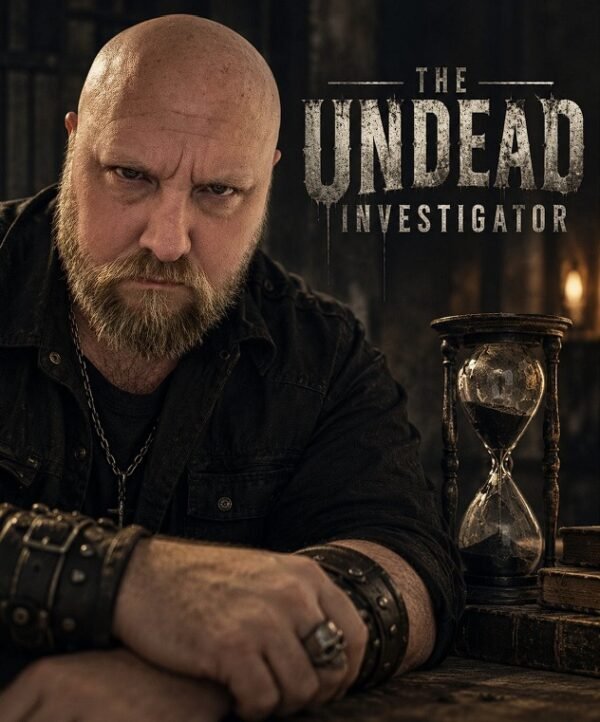
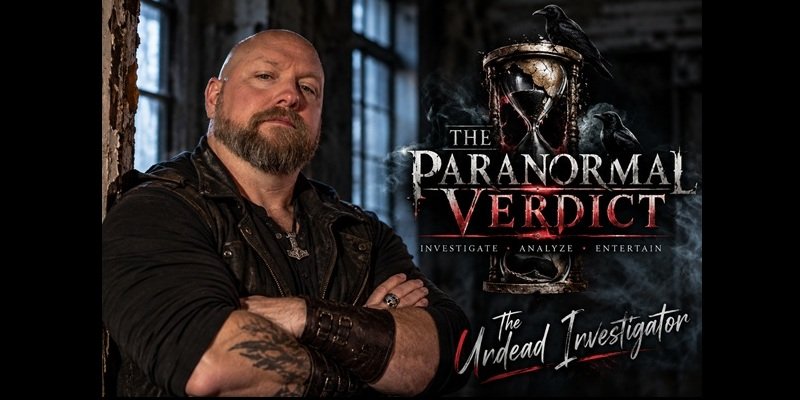
Brian Cuthbert as The Undead Investigator, a paranormal character inspired by his experience of surviving cardiac arrest. Image courtesy of Brian Cuthbert.
After spending more than 30 years investigating the dead, I actually died myself. Cardiac arrest, the whole nine yards. Fortunately, I came back, although I’m pretty sure Death wasn’t thrilled about it.
So I decided to turn that experience into a character. The Undead Investigator is basically me with the personality dial turned up. Confident, cocky, a little irreverent, and definitely not afraid to have some fun with the subject.
My tagline pretty much sums him up: “I died, came back, and now I’m looking for the ones who didn’t.”
I’m working on bringing him to live events, conventions, and paranormal investigations, mixing real experiences, storytelling, dark humour, and audience participation.
I want people to come out, have a great time, and experience something different from the usual paranormal presentation.
Ultimately, that’s where I want to take all of this. A community built around curiosity, an entertaining channel people actually want to participate in, and a character who can bring that experience to audiences in person.
I spent decades chasing ghosts. Now I’m making a career out of the fact that I briefly joined them.
What’s Next for The Paranormal Verdict?
From unexplained childhood experiences to unusual encounters inside historic buildings, Brian Cuthbert’s paranormal journey has certainly been an eventful one.
But perhaps what makes his approach particularly interesting is his willingness to challenge every bit of evidence that attracts so much attention within the paranormal community.
While Brian believes that he has witnessed things that remain unexplained, he also argues that investigators should understand their equipment, examine alternative explanations and attempt to recreate unusual phenomena before drawing to conclusions.
With plans for further investigations, community-submitted experiences and the development of The Undead Investigator, there appears to be plenty more to come from The Paranormal Verdict.
I would like to thank Brian for taking the time to share his experiences and answer my questions.
You can follow The Paranormal Verdict on TikTok, Instagram and YouTube to explore Brian’s investigations, evidence breakdowns and paranormal commentary.
What do you think of Brian’s approach? Should paranormal investigators spend more time trying to explain unusual evidence before declaring it supernatural? Let me know your thoughts in the comments.
Enjoy Paranormal Globe?
Add us as a Preferred Source on Google to see more latest stories in Google Search.
About the Author: Paul Nichol